Emergency management seldom looks heroic in the moment. It resembles a calm voice on a crackling radio, a constant hand on a door that sticks, a headcount created with a candid pencil while alarm systems howl. The PUAFER006 course, Lead an emergency situation control organisation, is developed for those moments. It prepares primary wardens and deputy principal wardens to work with emptyings, direct emergency situation control organisation (ECO) groups, and guide the post-incident testimonial that shapes what happens following. If PUAFER005 is about operating as component of an ECO, PUAFER006 is about bring the weight of decisions when secs feel like a long time.
I have actually trained both wardens and chief wardens throughout workplace towers, manufacturing plants, healthcare facilities, shopping centres, and remote depots. The most effective leaders do not yell or improvisate extremely. They prepare, drill, and afterwards show silent authority. That is the basic the PUAFER006 course intends to instil, and it enhances the PUAFER005 course that constructs the structure for every single warden.
The useful distinction between PUAFER005 and PUAFER006
PUAFER005, Run as part of an emergency situation control organisation, outfits wardens to identify emergency situations, adhere to procedures, sweep their locations, marshal owners, and job under the instructions of a chief warden. It is the baseline for fire warden training across Australian offices, and it verbalizes fire warden requirements, functions, and interaction protocols. Individuals occasionally treat it as a one-off fire warden course, but the very best programs treat it as a living skill set, revitalized every 6 to one year with drills and circumstance practice.
PUAFER006, Lead an emergency control organisation, moves from execution to management. It anticipates you to interpret insufficient information, select partial evidence, and incorporate advice originating from wardens, building systems, and emergency services. Where PUAFER005 focuses on "what to do," PUAFER006 has to do with "what to decide" and "that does what, when." It includes acceleration triggers, the choice to shelter in place or evacuate, staging and mustering factors, lifts and staircase technique, vulnerable persons management, interactions technique, and the framework of a post-incident debrief.
In short, if PUAFER005 is the backbone of emergency warden training, PUAFER006 is the mind and the voice.
The management mindset in an ECO
The chief warden stands at the centre of the ECO. That duty is not ceremonial, and it is not defined by a headgear alone. Still, hat colours help occupants rapidly determine leaders. In Australian practice, wardens frequently put on red, interactions officers white with a blue red stripe, flooring wardens yellow, and the chief warden usually white. When someone asks, what colour helmet does a chief warden wear, white is the normal answer. That exposure issues when individuals are terrified and searching for direction.
Leadership under stress calls for 3 qualities that the PUAFER006 course gives life.
First, pattern recognition. Emergency situations are unpredictable, yet they do rhyme. An electric area fire has indicators. A medical emergency situation in a parking lot adheres to a path of feedback that your team should practice. An unsafe spill in a warehouse with bad air flow need to spring an acquainted playbook, not a stressed debate.
Second, disciplined communication. The chief warden can not be anywhere. Info moves in, and choices head out. The radio script, the condition boards, and the SOS message to residents need to be short, accurate, and free of drama. I have actually seen one unpleasant radio transmission trigger confusion across three floors. The course drills radio self-control for precisely that reason.

Third, pre-incident influence. Reliable chief wardens quietly shape their work environments well before an alarm starts. They collaborate with structure management on discharge representations, they push for unhampered egress, and they involve human resources in preserving an up-to-date listing of mobility-impaired occupants. They insist that emergency warden training is not box-ticking, and they fight for sensible drills. When the phone call comes, those disagreements pay off.
What the PUAFER006 course commonly covers
RTOs differ in distribution and focus, yet the proficiency has a constant core:

- Planning and control of ECO activities, including the visit and rundown of wardens, replacement wardens, communications officers, and first aiders. Real-time analysis of emergency situations, consisting of preliminary size-up, risk identification, and decision-making thresholds for evacuate, partial evacuate, or shelter in place. Communications, from radio procedures to PA announcements, SMS alert themes, and intermediary with emergency situation services. Evacuation monitoring, including upright and straight evacuation, spill-safe paths, lift lockouts, and setting up factor management. Post-incident tasks, including audit for individuals, event logs, immediate salvage and re-entry controls, and formal debriefs that feed continual improvement.
The course is sensible. Anticipate scenario deal with injects that make complex the event: a blocked stairwell, a missing specialist, a person that comes back to recover a bag, a dud after you have actually already organized the discharge. Those wrinkles mirror reality. Fire warden training that avoids them feels cool in a class and breakable on the day.
Fire warden demands and the workplace reality
Regulatory structures anticipate a workplace to have a documented emergency strategy, an established ECO, discharge layouts, and skilled wardens. Fire warden requirements in the workplace surpass nomination. Nominees have to finish appropriate training with a concentrate on their website, after that refresh on a regular basis. A five-year-old certification might please a filing system, but it does not prepare a person to coordinate a discharge when the reduces out.
For facility sites, the fire warden training requirements range with risk. A multitenant high-rise demands strong sychronisation between tenant principal wardens and the building's emergency control space. A health center or aged treatment center needs layered training for horizontal evacuation and protecting in place. A fuel depot decides courses that run upwind by default and pre-plans splash containment. You can not paste the very same warden course into every website and anticipate it to work.
A note on titles: "chief fire warden" and "chief emergency warden" appear interchangeably in many work environments. The obligations coincide. Chief warden responsibilities include designating and educating wardens, keeping ECO preparedness, making sure drills, commanding throughout cases, and leading post-incident evaluations. Chief fire warden requirements commonly add liaison with structure management and understanding of fire panels, domino effect matrices, and problems procedures for fire systems.
The helmet, the vest, and why appearance still matters
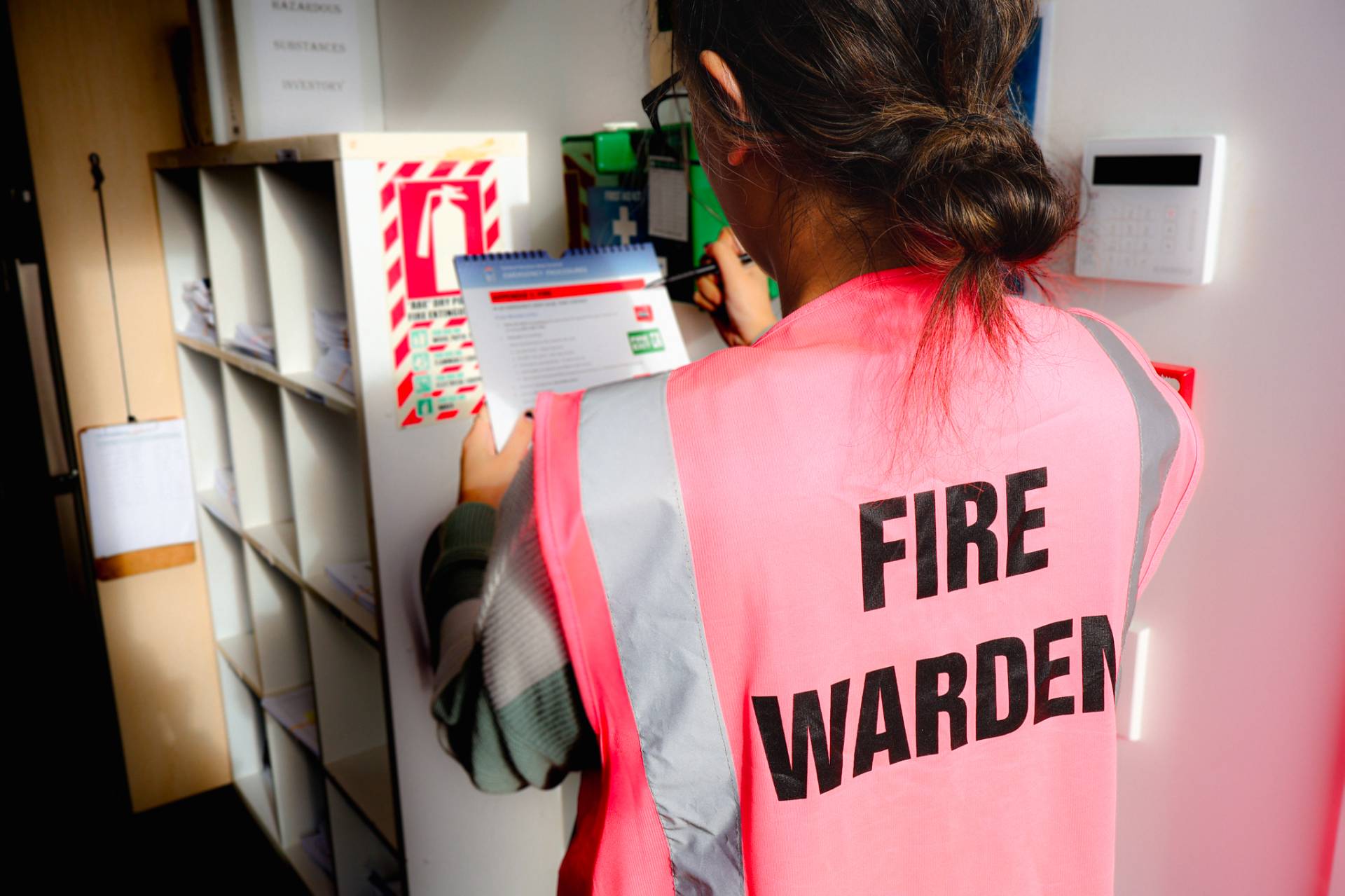
The inquiry, what colour helmet does a chief warden wear, comes up in almost every session. The usual Australian convention is white for chief warden, red for wardens. Some websites utilize high-visibility vests with titles on the back, which work well in work environments where hard hats are already used. The chief warden hat colour is not mandated country wide, but consistency inside a site is crucial. People follow what they can see. Throughout one evacuation in a mixed-use structure, the chief warden wore a navy jacket, and two various flooring wardens wore white hard hats from a fit-out staff. Passengers were noticeably baffled regarding who supervised. Afterward, the site changed to labelled vests with extra-large text, and complication went down throughout the next drill.
Building an ECO that really performs
The most effective teams do four things well.
They recruit broadly. An excellent emergency warden group includes individuals from operations, admin, safety, and specialists who get on site day-to-day. If your ECO is piled with only managers, you will certainly lose protection throughout shift modification or lunch.
They map susceptabilities. They keep an easy register of mobility-impaired passengers, expectant moms and dads that have actually asked for support, and others that could require help. Personal privacy matters, yet so does safety. 2 discreet buddies appointed per person, with a main and a back-up, functions better than a vague guarantee that "somebody will aid."
They drill smarter. The very best drills are neither masterpieces nor gotcha games. They test a couple of elements at a time, then debrief thoroughly. If elevators fail as set, evaluate a stairwell constraint. If your marshals count heads well, inject a visitor without a badge. Build knowing, not fear.
They maintain devices. Radios charged and identified, extra batteries in a locked box, high-vis vests awaited the exact same area each time, megaphones examined monthly, emergency treatment kits examined. This is dull up until it conserves minutes.
The decision points that specify an incident
Incidents rest on a few vital telephone calls. In PUAFER006 training, we hang out on those minutes due to the fact that they shape outcomes.
One, the very early size-up. Before proclaiming a complete emptying, the chief warden evaluates the activating system, smoke records, area, time of day, and exterior problems. At 3 a.m., an alarm system in an uninhabited flooring with a known detector fault is different to an alarm system at noon with smoke noticeable. You buy time by asking the best concerns and relying on trained wardens to confirm quickly.
Two, partial or full evacuation. A partial discharge gets control, reducing blockage in stairs and permitting you to maintain crucial procedures running where secure. It also risks miscommunication. Your radio technique and PA messaging have to be crisp. If you can not guarantee clearness, simpleness wins: full evacuation.
Three, persons unaccounted for. It is alluring to send out wardens back inside. On a great smoky flooring with unidentified fire spread, that is a risky option. The safer alternative is to liaise with fire services, offer last recognized places, and let them look with breathing device. Individual courage is not the like audio command judgment.
Four, re-entry. Re-entry too early reverses an excellent emptying. Also after the panel resets, consult emergency situation solutions and conduct a quick walk-through where possible. Try to find residual hazards, drop risks from water, and powered devices left in risky states.
Communications: the art of saying much less, better
No one remembers a five-paragraph announcement. Individuals hear the first sentence and act on the second. Throughout chief warden training, we exercise manuscripts that utilize location, activity, and reassurance. For instance: "Attention Degree 10. Smoke detector activation in the Degree 10 kitchen space. Wardens, check out and report. All others, stand by and await additional direction." If confirmed, "Attention all levels. Leave via the nearest safe stairwell and put together at the north parking area. Do not use lifts."
For radio website traffic, one habit aids: telephone call signs. "Principal to Flooring 10 Warden, standing," beats "Hey, can someone inspect emergency warden training Level 10." Pro words like "stand by," "copy," and "repeat" reduce uncertainty. Speak gradually. In one real event, a warden's report that "stair A is clear" seemed like "stair A is obstructed," which transformed flow for three mins till corrected.
Case notes from genuine incidents
A production website with a paint booth had a little flash fire that self-extinguished. The chief warden bought a partial emptying of the paint line and nearby warehouse, leaving the office untouched. The ECO separated power, used a thermal video camera, liaised with firemens, and had the event to one area. Production returned to two hours later on. The post-incident evaluation included one action: a quicker air modification cycle after paint line stoppages.
A high-rise with a fit-out crew on Level 15 set off an alarm system with dirt. The chief warden began a presented floor-by-floor discharge, but the stopped working on numerous degrees as a result of an amplifier mistake. Wardens switched over to megaphones and stairwell announcements. Residents relocated predictably, no panic. The evaluation wrapped up with 2 upgrades: redundant boosting and a simple text sharp system connected to the structure's visitor monitoring database.
An aged treatment center encountered a night-time space fire contained by a closed door. The chief warden, trained under PUAFER006, routed a horizontal discharge of one wing, maintaining delicate homeowners away from stairs. Team shut fire doors, sheltered in position with 2 rooms, and worked under firemen assistance. The smoke damages was very little and no local was wounded. That result grew from earlier warden training focused on the site's precise design, not generic drills.
Post-incident review that causes improvement
The post-incident review is where a chief warden's impact multiplies. It needs to be timely, evidence-based, and fair. Beginning with realities: time stamps from the panel, radio logs, headcounts, system backgrounds. Catch what functioned, what did not, and what almost failed but did not. Near misses out on educate as much as failures.
Avoid blame, particularly in the initial 2 days. Feelings run hot. Focus on procedures, not individualities. A warden that missed a move may have been covering two huge areas. A missing specialist could reveal a space in site visitor sign-in. A confusing could show that the script was also long. Tie activities to proprietors and timelines. If your office makes use of a threat register, log products there, not just in meeting minutes.
For many sites, 1 or 2 enhancements after each drill or occasion compound into robust durability. Over a year, those changes could include a revised discharge layout, an expanded ECO roster, updated radio labels, extra directional indicators, or a weather-alternative setting up point when summer season heat is brutal.
Integrating PUAFER005 and PUAFER006 into a training cadence
A good training tempo mixes both units. Wardens full PUAFER005 to develop capability with roles and procedures. Chosen leaders complete the PUAFER006 course to enter chief warden or deputy functions, and to mentor others. Refresher courses take place a minimum of every year, and drills occur regularly than that. Sites with greater threats or high turn over take advantage of quarterly exercises, with at the very least one entailing exterior solutions each year.
Many RTOs provide a mixed pathway that consists of both PUAFER005 and PUAFER006, specifically for brand-new ECOs. This can be efficient when developing a team from square one, but there is value in depth also. A focused PUAFER006 course with scenario-heavy method is hard to defeat when developing chief warden judgment.
Common questions, useful answers
People commonly inquire about the chief fire warden hat colour. As kept in mind, white is the typical option. If your website utilizes vests as opposed to headgears, make the chief warden vest white or bright lime with huge black text. Consistency is more important than fashion.
Another regular concern focuses on fire warden requirements in the workplace. Past nominating individuals, the obligation consists of training, ongoing competence, and resourcing. If your wardens do not have radios, if the evacuation representations are dated, or if the setting up location is obstructed by building and construction, you do not have a genuine ECO. That is an obligation in both safety and compliance terms.
Chief warden obligations in some cases really feel expansive. They are. But delegation becomes part of the duty. Usage deputy chief wardens to handle alternate exits, assign a scribe to keep the case log, and empower flooring wardens to make neighborhood phone calls lined up with your strategy. The chief fire warden duties consist of making sure the maker runs, refraining from doing every task personally.
When to sanctuary in place
Evacuation is not constantly much safer. In chemical incidents upwind of a website, in fierce burglar situations, or when smoke problems make staircases unsafe, safeguarding in position can be the very best alternative. PUAFER006 training covers this, however workplaces should intend the details. Which rooms seal well, which have water and commodes, just how to regulate airflow, and exactly how to communicate exact updates. After a trespasser drill at a country school, one team discovered that their chosen shelter area had a glass wall encountering a hallway. They changed to a more safe inner room and installed blackout blinds.
Contractors, visitors, and night shifts
Most discharge failures trace to people who sit outside typical processes. Specialists move without supervisors. Site visitors do not recognize the stairs. Night shifts are lean and typically rely upon a solitary warden who covers too much ground. The service is a mix of controls. Daytime functions should issue site visitor badges with evacuation instructions, and the badge needs to consist of the setting up factor. Professional supervisors ought to be inducted with specific duties under the ECO. Night shift work needs a smaller sized, achievable plan: fewer zones, direct staircase accessibility, and a second warden offered on-call. Throughout one late-night event at a circulation centre, a two-person ECO left 80 employees smoothly due to the fact that the site had preassigned muster captains amongst forklift leads. Easy, regional leadership functions when official coverage is thin.
Documentation that aids as opposed to hides
Emergency strategies are infamous for thickness and inertia. Chief warden training motivates lean papers that individuals can make use of in warmth. A one-page flow for alarm kinds and preliminary actions beats twenty pages of prose. Evacuation diagrams belong in every occupancy, upgraded after layout changes. Radio telephone call sheets, wardens' call lists, and head count kinds ought to be existing and published, not just buried in a network drive.
For many websites, a pocket-sized ECO card with vital phone call indicators, PA scripts, and assembly factors becomes a favourite device. The very best fire warden course suppliers provide these as part of the kit, with space to create local information. If your supplier does not, make your own.
Selecting and sustaining primary wardens
Not every person wants the duty, and that is great. Search for calm temperaments, organisational trustworthiness, and a determination to practice. Former military or emergency situation service experience assists, however it is not called for. A solid procedures supervisor with great radio routines commonly stands out. Offer time for chief warden training and drills, not just assumptions. Recognise the duty officially. Individuals will certainly take the function seriously if the organisation does.
If you run a huge website, produce a deputy chief warden rotation. This grows bench toughness and guarantees insurance coverage. Throughout holiday periods, release a clear roster and a fallback. Emergencies are agnostic concerning rosters.
How an excellent post-incident evaluation improves insurance and compliance
Insurers appreciate loss avoidance, not just insurance claims. Demonstrating that you finished a structured post-incident evaluation, executed corrective activities, and maintained your ECO can influence costs and underwriting terms. Regulatory authorities and structure managers respond similarly. The financial situation for significant warden training is not abstract. I have actually seen a single electrical area fire cause a six-figure company interruption, and I have seen the very same hazard neutralised in minutes due to the fact that the ECO separated a panel and escorted specialists effectively for repairs.
What a strong PUAFER006 course looks like
When you assess a supplier for a PUAFER006 course or a chief fire warden course, seek situation time. Tabletop workouts with maps, radio web traffic, and timed choices defeat lengthy talks. Ask whether they can personalize injects to your website risks, such as ammonia systems, lithium battery storage space, or public groups. Inspect that they can run combined sessions with wardens who completed PUAFER005, so leaders and wardens method with each other. Validate that they cover post-incident review with design templates you can take away.
Good companies likewise acknowledge the realities of human practices. People freeze, over-help, or resist instruction. A reliable training course addresses those dynamics, not simply the technological steps.
A brief area list for primary wardens
- Take charge and declare the event. Assign functions early: scribe, comms, flooring checks. Verify the location and nature of the emergency rapidly. Usage wardens for eyes-on. Decide on discharge scope and reveal clearly. Maintain messages short and specific. Account for individuals at the setting up point. Track unaccounted names and last well-known locations. Control re-entry and begin the post-incident log and debrief within 24 to 72 hours.
The peaceful payoff
A great emergency warden course reassures. A solid chief warden course provides command visibility. Together, they develop a culture where alarms are met deliberate activity instead of complication. With time, wardens talk even more plainly, owners comply faster, and cases diminish in effect. The white chief warden hat, or the title on a vest, becomes less about authority and even more concerning solution: the duty to lead under pressure, to believe while others move, and to help a workplace pick up from every alarm system it faces.
For organisations considering whether to purchase PUAFER005 and PUAFER006 training, the decision is not practically compliance. It is an investment in individuals who will certainly stand constant when it counts, coordinate evacuation with care, and run post-incident reviews that make tomorrow safer than yesterday.
Take your leadership in workplace safety to the next level with the nationally recognised PUAFER006 Chief Warden Training. Designed for Chief and Deputy Fire Wardens, this face-to-face 3-hour course teaches critical skills: coordinating evacuations, leading a warden team, making decisions under pressure, and liaising with emergency services. Course cost is generally AUD $130 per person for public sessions. Held in multiple locations including Brisbane CBD (Queen Street), North Hobart, Adelaide, and more across Queensland such as Gold Coast, Sunshine Coast, Toowoomba, Cairns, Ipswich, Logan, Chermside, etc.
If you’ve been appointed as a Chief or Deputy Fire Warden at your workplace, the PUAFER006 – Chief Warden Training is designed to give you the confidence and skills to take charge when it matters most. This nationally accredited course goes beyond the basics of emergency response, teaching you how to coordinate evacuations, lead and direct your warden team, make quick decisions under pressure, and effectively communicate with emergency services. Delivered face-to-face in just 3 hours, the training is practical, engaging, and focused on real-world workplace scenarios. You’ll walk away knowing exactly what to do when an emergency unfolds—and you’ll receive your certificate the same day you complete the course. With training available across Australia—including Brisbane CBD (Queen Street), North Hobart, Adelaide, Gold Coast, Sunshine Coast, Toowoomba, Cairns, Ipswich, Logan, Chermside and more—it’s easy to find a location near you. At just $130 per person, this course is an affordable way to make sure your workplace is compliant with safety requirements while also giving you peace of mind that you can step up and lead when it counts.